“Harlem’s Coney Island has one great advantage over Everybody’s Coney Island, and that is it costs only a nickel to get there. Every nickel means a glass of beer or a frankfurter, and every East Sider knows the value of a nickel. That is one great reason why Fort George is popular.” -The Sun, August 13, 1905

In 1895, on the same spot where George Washington and his band of Revolutionaries defended a British assault after the Battle of Brooklyn, a glorious and magnificent amusement park rivaling Coney Island opened near the northeastern end of Manhattan.

The Fort George Amusement park was located in what is now the northernmost end of Highbridge Park between 190th and 192nd Streets and Amsterdam Avenue.

During its heyday this Gotham wonderland would boast two Ferris wheels, three roller coasters, nine saloons, a pony track, several hotels, a casino, five shooting galleries, a tunnel boat ride, two music halls called the Star and the Trocadero, fortune tellers and more frankfurters, peanuts and pretzels than you can imagine.

Located at the end of the Third Avenue Trolley line, the park was a natural and popular destination for locals and residents throughout the city. While the children rode the massive Ferris wheel or took to the Toboggan slide adults could gamble the night away before renting a room in the Fort George Hotel and Casino to celebrate their winnings, or more likely, mourn their losses.
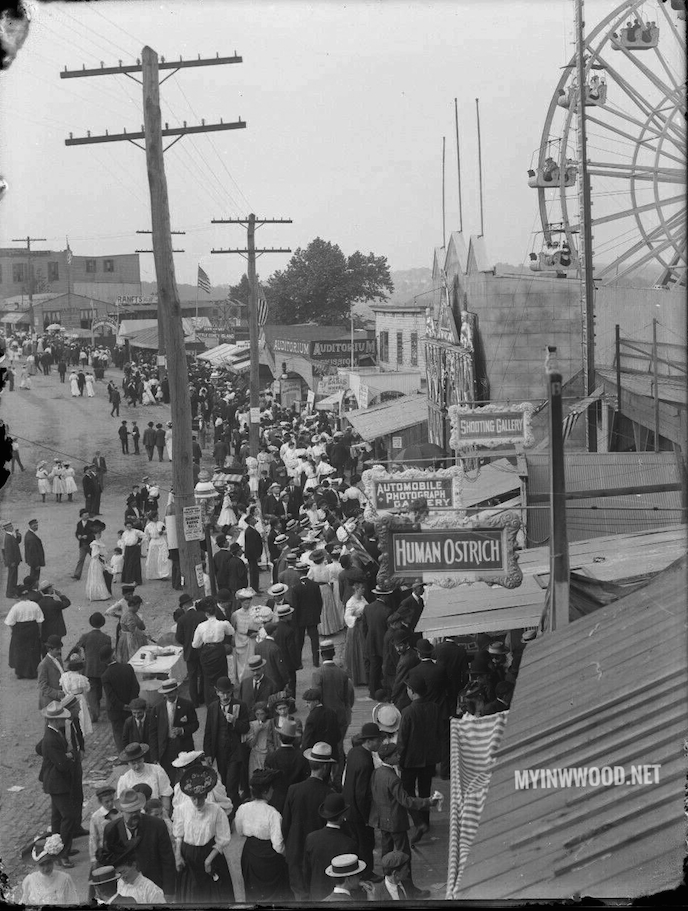
There were even areas in the park where, for a fee, Mom and Dad could drop the kids off in a supervised playground setting, while they went off to enjoy “The Human Ostrich” or “The Cave of Winds.”

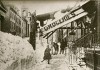
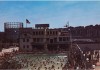
Initially a loose and disorganized strip of sideshows the park became something truly spectacular under the leadership of Joseph Schenck (left) and his brother Nicholas. The brothers, Russian Jews who immigrated to New York from the ancient Slavic settlement of Rybinsk in 1893, first came to the park as curious visitors. Realizing the fortunes to be made they quickly invested in a beer hall called The Old Barrel.


It was in the Old Barrel that the Schnecks likely met another entrepreneur named Marcus Loew (right) , a park regular who had already amassed a small fortune with a string of theaters and penny arcades. (Loew would later become a Hollywood power-broker heading a theater chain that still bears his name.) Borrowing money from Loew, the brothers Schneck were soon able to open several thrill rides in an area of the park known as Paradise Park.
In a June, 1941 edition of Liberty Magazine, found by New York Wanderer Ben Feldman while rummaging around in a Tennessee junk shop, details of the early days of the park begin to emerge:
“One hot Saturday afternoon in 1905, Joe Schenck, then about twenty-six, took a trolley ride up to Fort George, the highest point on Manhattan Island. That was quite the thing to do in those days–ride to the end of the car line up there to cool off. When Joe arrived he found more than a thousand other New Yorkers strolling about enjoying the breezes. He noticed that there were a beer parlor or two, a couple of shooting galleries, and some tintype stands, and he quickly concluded that this was insufficient entertainment for all those people. He began to talk to some of them, inquiring if they would come up nights, as well as Sundays, if Fort George offered a dance hall, a merry go-round, and other attractions like those at Coney Island. Everybody he questioned said “You bet!” or words to that effect.

Joe took a lease on a small one-story building at Fort George that could be reached only through an alley. He constructed a cheap dance floor in the rear and turned the building into a saloon. He hired an orchestra and an unknown singer named Nora Bayes, put tables around the dance floor, and then waited. But the people just wouldn’t go through the alley, not even through a big sign that proclaimed: “Beer and Dancing in Rear.”
What would be most likely to entice the public? It was brother Nick who suggested that a picture would be better than printed words. Joe hired a man who painted scenes on mirrors behind the bars to make a garish-colored wooden cutout of a huge beer schooner with the foam on the amber contents. The schooner, lighted up at night, could be seen from a distance, and it drew the thirsty in droves. The result was that by summer’s end Joe Schenck had cleaned up several thousand dollars.

Early in the spring of 1906 Joe and Nick began construction of what they called Paradise Park. On a Saturday afternoon in May, they were all set for the opening. They weren’t as enthusiastic as they might have been. After the merry-go-round and the other equipment had been installed, mostly on credit, they had realized, to their horror, that it would be necessary for the public to climb fifty-six steps to get to the park after leaving the trolley cars. They had been so engrossed in building the park on a high, cool spot that they had entirely overlooked that seeming drawback.

The brothers held their breath as the first of the Saturday-afternoon crowd began to spill out of their cars. When the visitors saw the amusements up there ahead of them, many were so eager that they took the fifty-six steps two at a time. The next day, Sunday, the same thing happened, and the Schencks knew that their fears about the steps had been unfounded. “And so,” Joe told me, “when we found the public didn’t mind the steps, we put a turnstile in–quick–right at the fifty-sixth step, and charged them ten cents admission. We hadn’t dared do that before.“

Some New Yorkers had such fond feelings for the park that it became a popular spot for wedding proposals. In fact, in June of 1907 nineteen-year-old Susan Pierce and Raymond Barrett went so far as to tie the knot on the skating rink where they met. The bride, bridegroom and minister all donned roller skates for the nuptials.
It was a first for the park and likely a first for New York. After exchanging vows some 500 couples joined Susan and Raymond on the rink to skate to the popular “Love Me and the World is Mine,” before the happy couple skated off to Atlantic City for their honeymoon.
But as the years passed, neighborhood sentiment towards the park soured.
Initially a boon for the local economy, local residents and real estate developers grew tired of the noise, the drunken crowds and the crime that came to be associated with the park.
“One thing that has always hurt Fort George is the reputation it has had for being a tough resort. It deserved this reputation to a certain extent, but its toughness was not due to the businessmen there. It got its bad name from some of the people who went there and from the inactivity of the police“.(The Sun, August 13, 1905)

Reforms were promised by then Police Chief William McAdoo, but even the Chief was at a loss to explain why this family establishment had become a magnate for the criminal element. According to the Sun, “He could not understand why so many holdups occurred at and near Fort George. In one night there were four.”
McAdoo soon established a “dead line” of officers every evening at midnight to scour the woods in the hopes of flushing out highwaymen and other assorted criminals.
McAdoo, as well as the reporter for the Sun, largely blamed the out of control environment on race-mixing.
According to the Sun, “Fights between negroes used to be of nightly occurrence. They overran the whole place and did pretty much as they pleased.”
McAdoo, put a Sergeant Corcoran in charge of “cutting down on negro attendance.” He also laid down the law with the owners of two concert halls “frequented by the negroes.”
The Chief threatened fines, jail time and loss of liquor licenses to owners who did not comply.
African Americans surely felt the sting of the Chief’s comments—their attendance plummeted from 2,000 to 300 a night.
Wrote the Sun, “The color line is drawn pretty strongly now at Fort George. There is one section of it that is patronized almost solely by negroes. There is a merry-go-round that is almost exclusively by them.”
McAdoo attempted maintain order amid the gamblers, swindlers, palm readers, megaphone men as well as run of the mill drunks and brawlers, but his reforms had little effect. The park remained a noisy and dangerous place.

By February of 1910, distressed neighbors demanded the music halls and saloons be abolished to make room for a public park.
Local historian and neighborhood activist Reginald Pelham Bolton led local residents in the fight against park. Then president of the Washington Heights Taxpayers’ Association, Bolton paid the resort a visit and reported his findings to the New York Herald:
“Our chief hope, of course, is that the force of public sentiment and the revelations of the evils that exist because of these resorts will decide the city to condemn the property and convert it into a park.”
“After and inspection of some of the resorts I can scarcely believe that the authorities will allow them to continue under present conditions,” said Mr. Bolton. “I have in mind one place where there is only one exit, and in case of fire all of the four or five hundred persons who are in the place would scarcely be able to escape.” (New York Herald, February 28, 1910)
On December 10th, 1911, an arsonist took public sentiment into his own hands and attempted to burn the park to the ground.
According to news accounts an out of control inferno, fanned by strong winds, destroyed the Star Music Hall, the old Fort George Hotel, the dance hall of Paradise Park, a popular tavern and several smaller buildings.
The damage, estimated at $25,000, could have been much worse if not for the daughter of truck farmer Nicholas Ceramer whose cries of “Papa, look at the fire,” allowed her father to sound the alarm. Ceramer emerged from his cottage across from the park just in time to “see a Man about 5 feet 9 inches tall, of stocky build, wearing a black hat and overcoat, run out of the lower floor of the music hall to the south. He gave chase, but failed to overtake the man.“
Two years later, still healing from the scars of the arson attack, the park suffered a fatal blow at the hands of another suspicious fire.

On June 9th, 1913, a fire described as “the most spectacular ever seen,” engulfed the Fort George Amusement Park. At around two in the morning, Dominick Barnot, the night watchmen for Paradise Park saw that the dance hall was on fire. Barnot ran for help, but within ten minutes the fire, fueled by a strong westerly wind, had become an inferno. One-hundred foot flames seen as far south as 42nd Street were reported that night.

Firemen and concerned volunteers descended on Fort George, but “the firemen quickly saw that it was their duty to save the property near by and let the park burn…One by one the play places were consumed. The roller coaster was quick to go, and then the Ferris wheel. And after the wheel the merry-go-rounds, the roller skating rink, and all the other things the Schneck Brothers had installed for the entertainment of the public.”


Down, but not defeated, the Schencks moved their act across the Hudson River, where they soon opened the wildly popular Palisades Park in New Jersey.

And, while Paradise Park was never rebuilt, a generation would remember the glory days and smile knowing they had witnessed a now forgotten piece of New York history.


Was this amusment park located across the street from the current George Washington High School? Do you think there would be any remains or artifacts of when the park was there. Like say if you dig in the dirt and find a foundation or something. Or has anyone tried this? I love to see things that remained from the past.
The amusement park was located on the site of the present George Washington High School. I imagine the site has been pretty well explored through the years, but you never know. The Dyckman farmhouse has a relic room in the basement. I understand they have a trove of other neighborhood artifacts they are processing for future display.
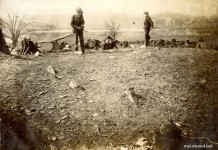
I grew up in the Dyckman Houses housing projects and went to GWHS. As a child, it was a great thrill to wander the woods of Ft. George and, if anyone has ever done so, you would find several foundations, of which we never knew what existed there. Obviously, these were the remnants of the amusement park, hotel, all the entertainment facilities that existed at the turn of the 20th century, but, by the 1960s, were just overgrown broken pieces of foundations that children rummaged through. You can imagine what a child could conjure up in his mind as to what those ruins were.
The amusement park was located on the site of the present George Washington High School. I imagine the site has been pretty well explored through the years, but you never know.
________________
There must be a lot of history buried beneath that high school. I went to that school in ’59-60 after voluntarily transferring over from the High School of Music & Art (talk about downward mobility!) where I went in ’56-8. That was the first time I ever encountered dope addicts and hypodermic needles lying around. Yep, already back then in ’59. I remember standing around in the basement on graduation day waiting for them to open the doors. I wore black, instead of the usual faded blue, dungarees under my gown as a concession to decorum. All the kids began loudly chanting, “1 2 3 4 open up the f’ing door!”. Yeah, it was a classy joint even back then. Must be a lot of good stuff underneath it though. They oughta bust it down and find out.
My grgrgrandfather Capt. Louis C. Wendel Sr.owned Ft Wendel amusement park & Hotel as well as Ft George’s up until the late 1890’s He had a lot of financial problems at the time which could explain why he let the park go to the Schneck’s . He also owned Von Schuetzens park in Union NJ
The PTC carousel that used to turn at Wendel’s Park in Fort George still exists and has been back and forth across the country several times over the past century, most recently back in the NYC area during the mid 1990’s to mid 2000’s when it spun at the Palisades Center Mall in West Nyack NY, Rockland County. After its stint at Wendel’s, the carousel went on to Dandellion Park in Muskego WI, Expo ’86 in Vancouver BC Canada, and Puente Hills Mall in Industry CA. It’s currently in storage and for sale or lease in Oregon.
I tried searching for 197th street and Amsterdam and it is not on today’s (google) map. Any idea where it would fall?
In our book Lost Amusement Parks of the Hudson Valley, we devote a chapter to the Ft. George Amusement Area. A few things were hard to clear up and remain a mystery. One was the deliniation of the street numbers back then. We have the Curve Music Hall listed at 197th St. and Ft. George Avenue but we have yet to see a vintage map indicating such a street. And Richard’s research (well done!) into the carousel that survived the great Ft. George fire is correct. It was built by the Philadelphia Toboggan Company for Ft. George in 1908 (the PTC #18). It is now located in Dee, Oregon where its owners will determine its next “home”. There were three grand carousels at Ft. George and we could not determine exactly where the PTC #15 was located. Its run at the Palisades Pyramid Mall (West Nyack NY) ended in 2009 when its owners could no longer run a profitable venture there.
My family used to live on West 150th and Broadway. Unfortunately by that time, the park was no longer there.
I grew up on 175th & Wadsworth in Washington Heights. I went to GW High from ’62-’66. I never once heard anyone mention that there was once an amusement park on the grounds. Nobody I knew knew that either. What a shame we didn’t know about it…that is such interesting history. By the way to the poster who went to GW in the ‘
50’s and had such a bad experience, I beg to differ. It was quite a good school and if the drugs were rampant at that time most of us were none the wiser. I do know that years later around 1971 the school started to go down hill. I only have good memories of GW, Washington Heights and of course Palisades Park.
[…] the Trocadero, fortune tellers and more frankfurters, peanuts and pretzels than you can imagine. My Inwood, which features plenty of photos and postcards of the […]
I grew up on W193 & St Nick/Wadsworth. I remember when the playground was finished “around the bend”…I could never figure out why they included so many horseshoe tossing pits but they did. I have heard that those pits were turned into a dirt bike course………Still my clearest memory of “around the bend” was the old Blockhouse/Fort located across from the park on the grounds of GWHS. I realize that it wasn’t something dating back to 1700s. It was constructed sometime after the time of the Amusement Park and , I guess, to mark some sort of anniversary….I’m sure that the DAR along with an Historical group had a hand in it being built…It lasted till the
1960s….I would love to get a photo/sketch/drawing of the Blockhouse….Any ideas/leads/contacts??……………………………………
Hi James, I lived across the street from the old block house that vandals burned down.
I also remember the house shoe courts around the bend. Please feel free for anyone to ask me any questions about this specifics of the area. I know it very well from the early 1960’s.
Glenn
[…] the Trocadero, fortune tellers and more frankfurters, peanuts and pretzels than you can imagine. My Inwood, which features plenty of photos and postcards of the […]
[…] out in today’s Highland Park. This amusement park actually had a couple roller coasters, according to one source. Yes, it eventually burned down as well, but its owners moved across the Hudson and opened the […]
[…] out in today’s Highland Park. This amusement park actually had a couple roller coasters, according to one source. Yes, it eventually burned down as well, but its owners moved across the Hudson and opened the […]
I lived at, 374 Wadsworth Avenue, on 191st and graduated from GW, June ’65. It was a great school for those who went there to learn and also, for those that just wanted to get through high school.
I remember as a grade school youngster, playing in the old fort, around the bend and later as a teenager, hanging out inside the arches under the ball parks, right field. The caves under the park were shared by many teenagers of the area including those from neighborhoods around the PS 189 area that extended from Audubon Avenue to Wadsworth Terrace and those who lived on Fort George Avenue. We used to go there, as pre 18 year old teenagers, to drink a beer or two, make out with our girlfriends, smoke a cigarette, some to practice their doo-wop harmony or just to hang out and shoot the breeze. I don’t ever remember any conflicts developing over the use of the caves. It was neutral territory that we all shared and enjoyed.
I remember one time, a group of us from Wadsworth Avenue, decided to do some interior decorating so, we carried an old rug to the caves and spread it out on the bumpy rock floor. That particular cave had a small wall that you had to climb over, in order to get into it.
What great memories.
Hi Raul, I played in that same little cave under the Athletic field and had to climb up a little while to get in. We played along the those crenelated walls. Correlation means the open down portion of the top of a Fort wall.
As a kid I also thought it was the original Fort wall from the revolutionary war but I later found out it was built for the amusement park.
Glenn
[…] out in today’s Highland Park. This amusement park actually had a couple roller coasters, according to one source. Yes, it eventually burned down as well, but its owners moved across the Hudson and opened the […]
When attending George Washington High School and hanging out behind the School’s athletic field during the 1950’s-1960’s in the evening hours of summer, I always thought the rocky ruins alongside of Ft. George Avenue to have been from a Revolutionary ‘fort’ but apparently they were not a fort but the remains of this magnificent piece of Heights history revealed by Cole Thompson & others as the Fort George Amusement Park! By the way, I also went to George Washington High School and lived for a short while two blocks away on 190th Street off Audubon Avenue at the same time as above poster, ‘Larry’, and never saw hypodermic needles or drug addicts where he said he saw them???
[…] the Trocadero, fortune tellers and more frankfurters, peanuts and pretzels than you can imagine. My Inwood, which features plenty of photos and postcards of the […]
A few of us from 175th between Audubon & St. Nick would go up to the block house fort in the early 50s, climb up through an opening in the overhang and play inside. At the time we thought it was from the Revolution. Years later I learned it was a student project at GWHS. I’ve emailed the high school a couple of times asking if they had any pictures and/or more details on the construction but they never replied. Henry Kissinger or Alan Greenspan would probably know something about it.
Hi, I lived at 121 Fort George Ave in the early 1960’s across the street west of the GW High School athletic field. We played in the woods and we saw many old foundations from the amusement park. It seems that the original Ferris Wheel 🎡 May have been located where the public park baseball field and handball courts are now located. I know the whole area very well so please feel free to ask me any questions and post on this blog or through my email address.
Glenn