

The natural beauty of the Spuyten Duyvil has long been the inspiration for artistic endeavors. Its marshland, slick currents, wildlife and humanity struck a particular chord within turn of the century painter Ernest Lawson.

Born in Halifax, Nova Scotia in 1873, Lawson was one of “The Eight“, whose members included William Glackens, George Luks, Maurice Prendergast, Robert Henri, Everett Shinn, John Sloan and Arthur P. Davies.
Often painting landscapes, Lawson, for much of his life, focused his impressionistic brush strokes on that narrow spit of water separating Manhattan from the Bronx.

Lawson seemed particularly enchanted by the landscape we now call Inwood Hill Park.
Today, Lawson’s beautiful landscapes are both valued and cherished by Museums around the nation. He did, however, among his contemporaries, have his detractors. Said famed realist painter William Glackens, “Lawson was accused of failing to disguise the more rugged elements in his canvases. His rocks looked hard and harsh-in other words, like rocks, not cream puffs; and he often included some human sign-a tumbledown shack, a sagging jetty, an abandoned rowboat-which in those genteel days were evidently considered no better than ash cans, and no fit subjects for ‘art.‘”
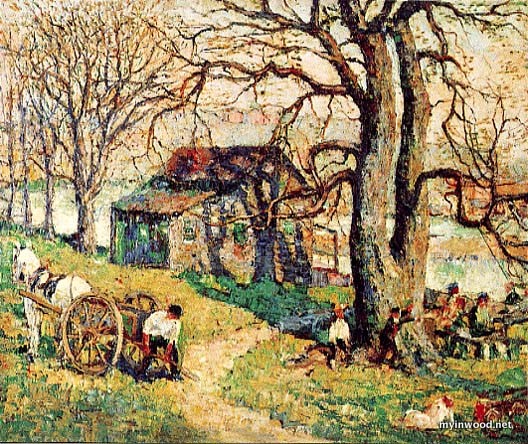
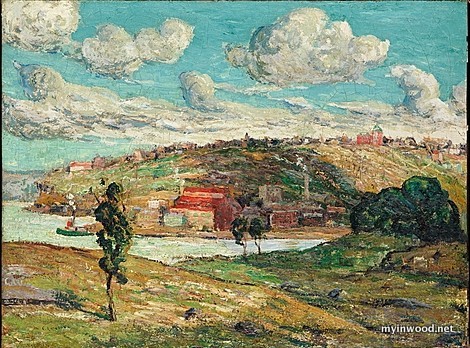
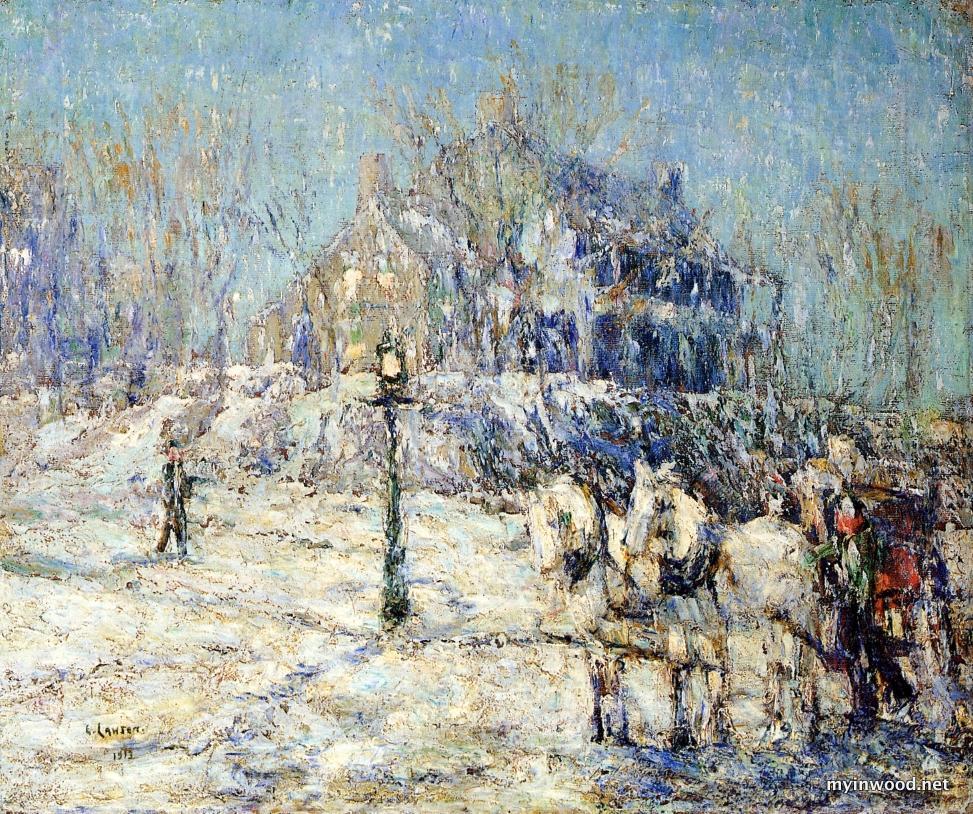
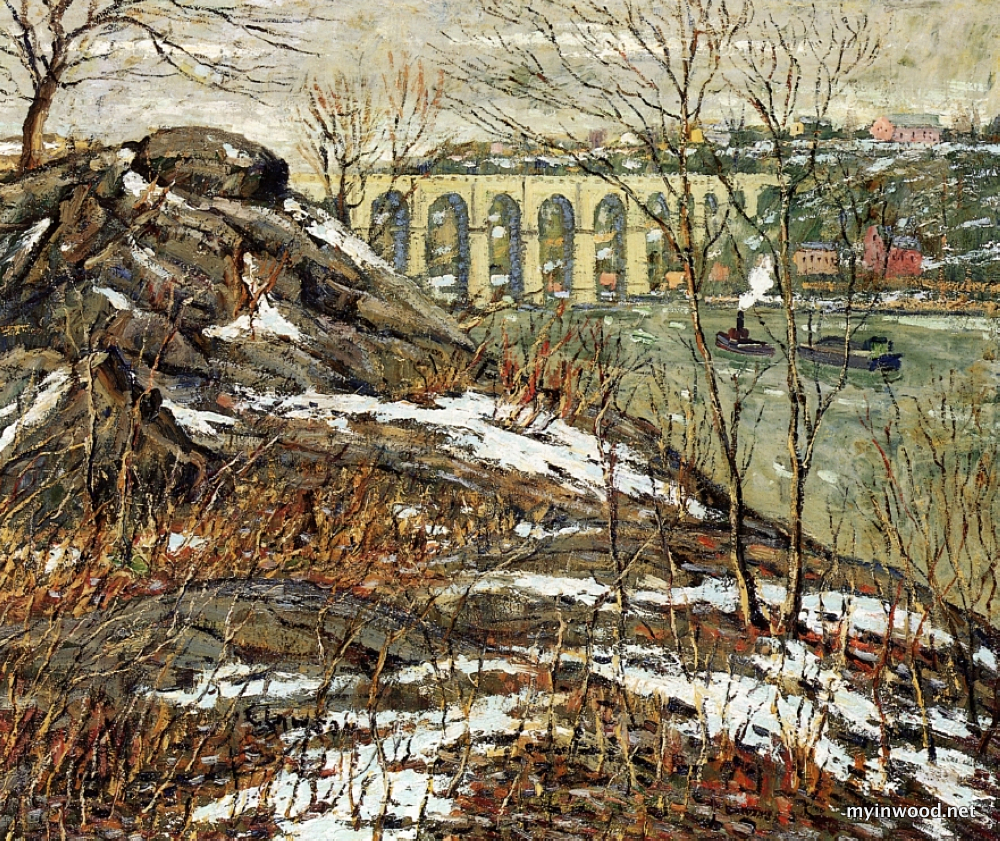
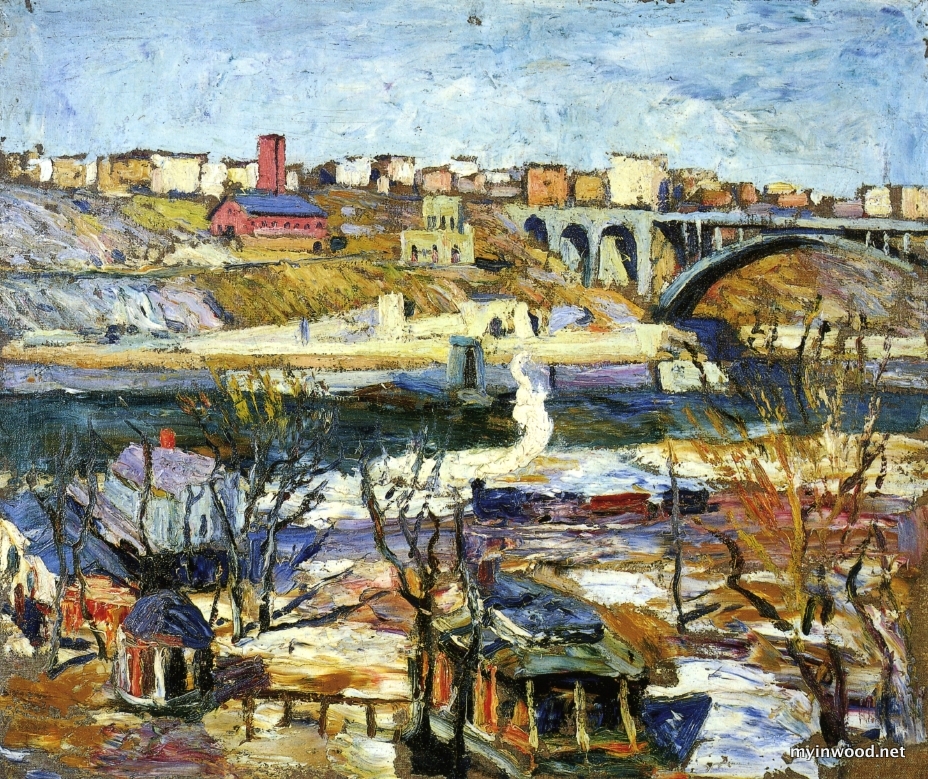
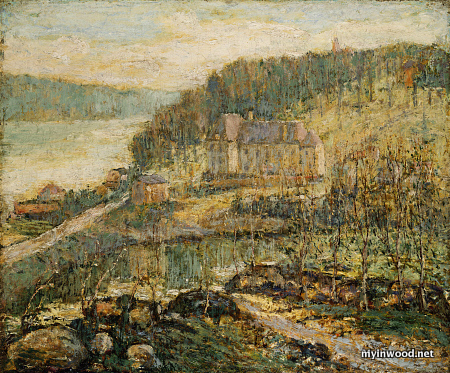
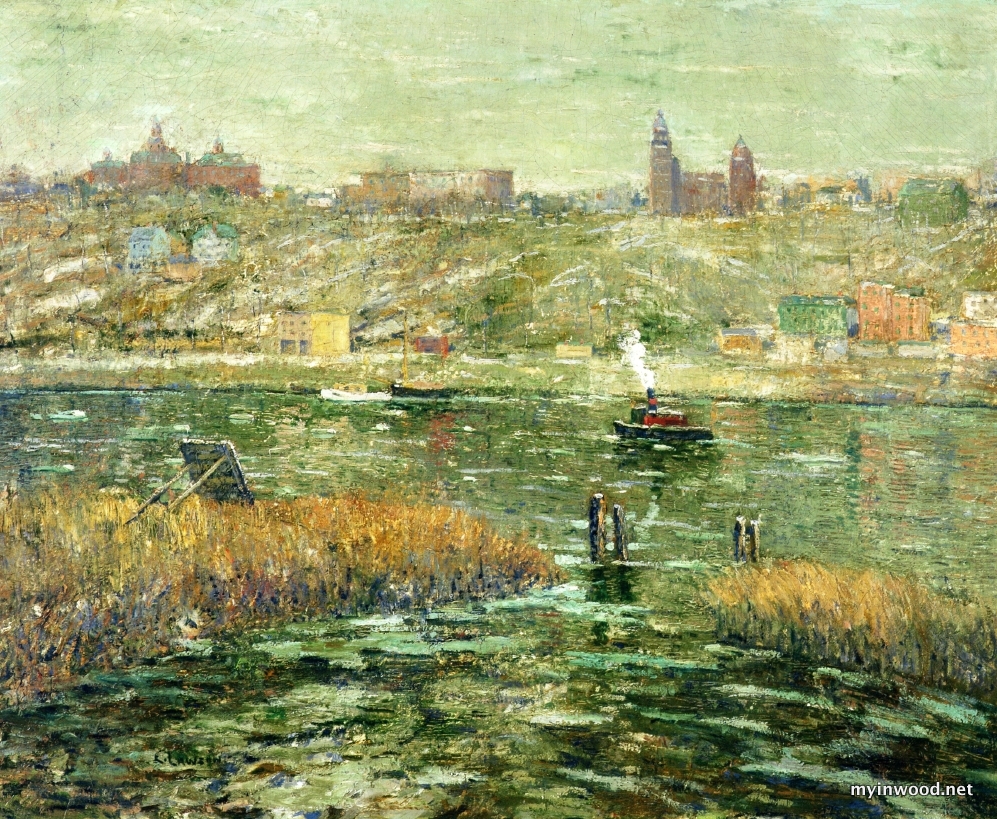
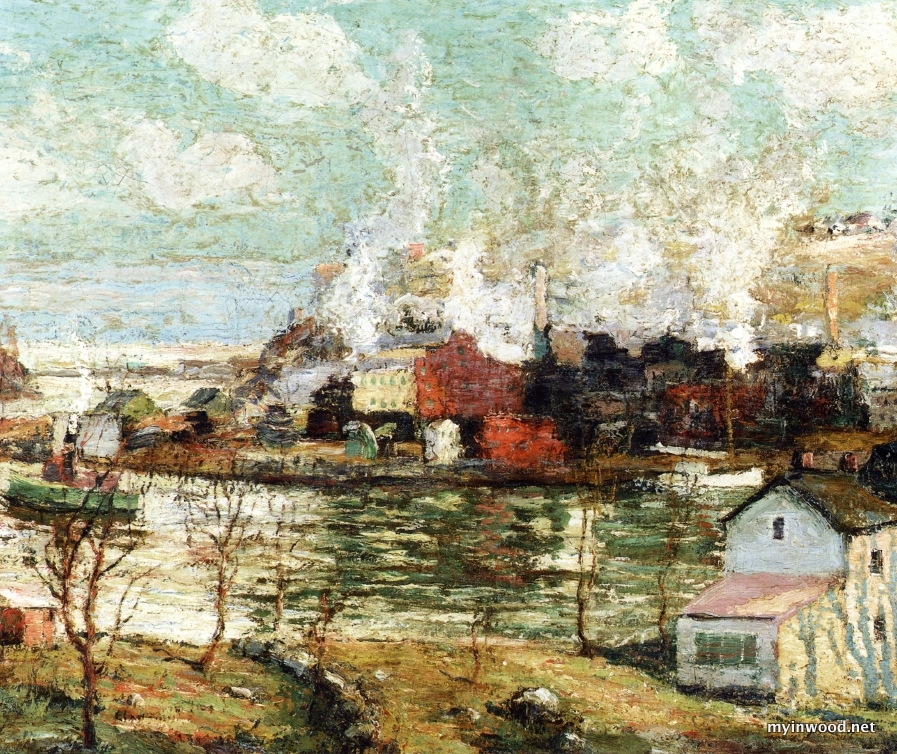
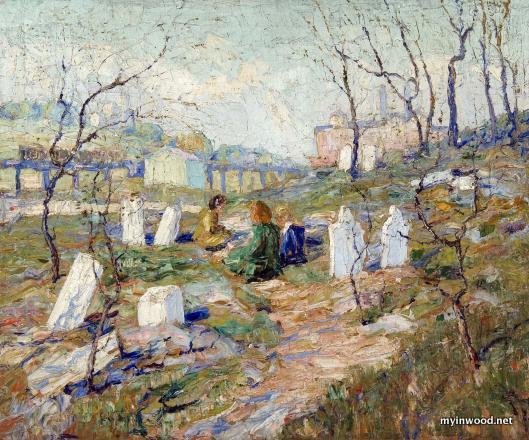
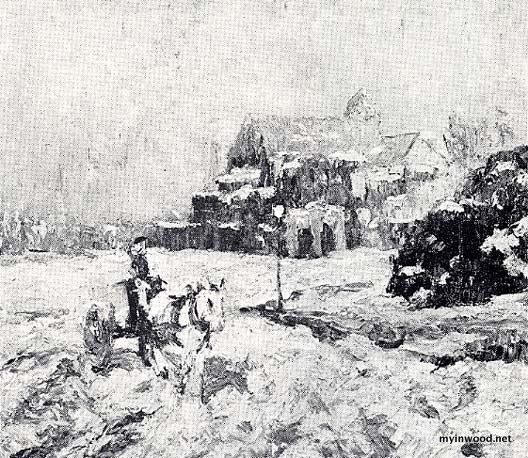
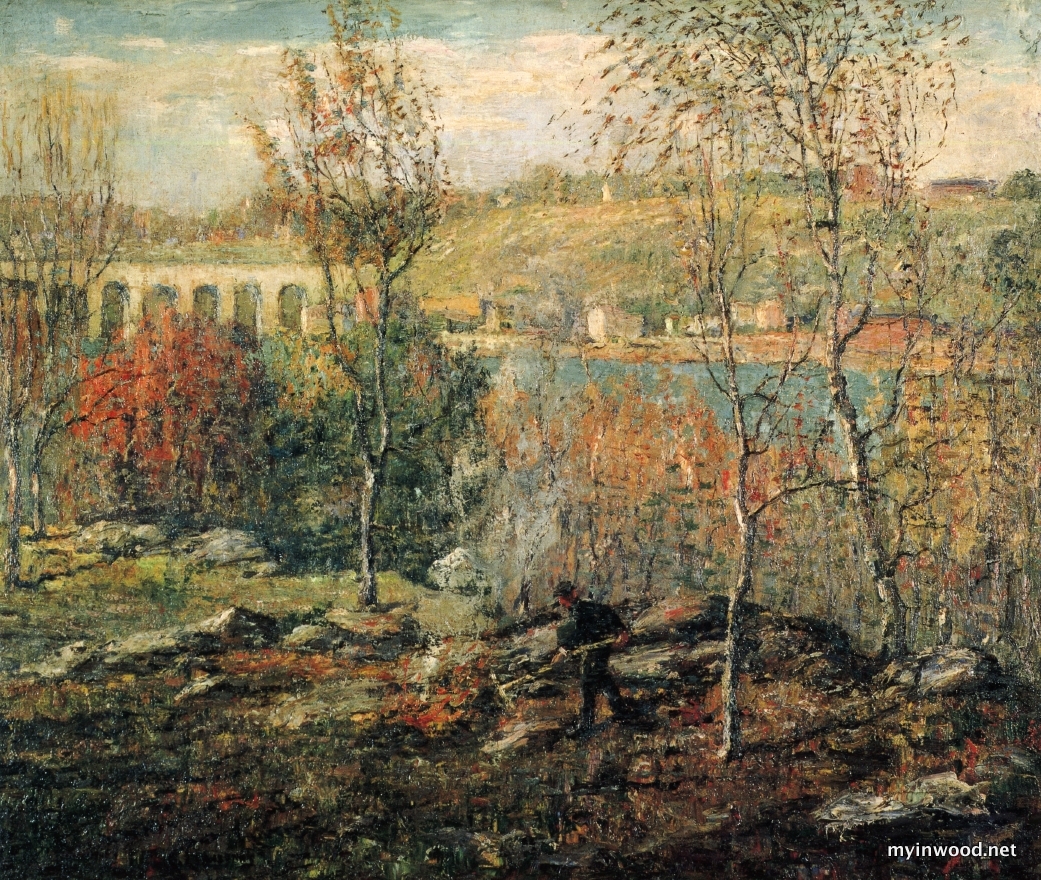
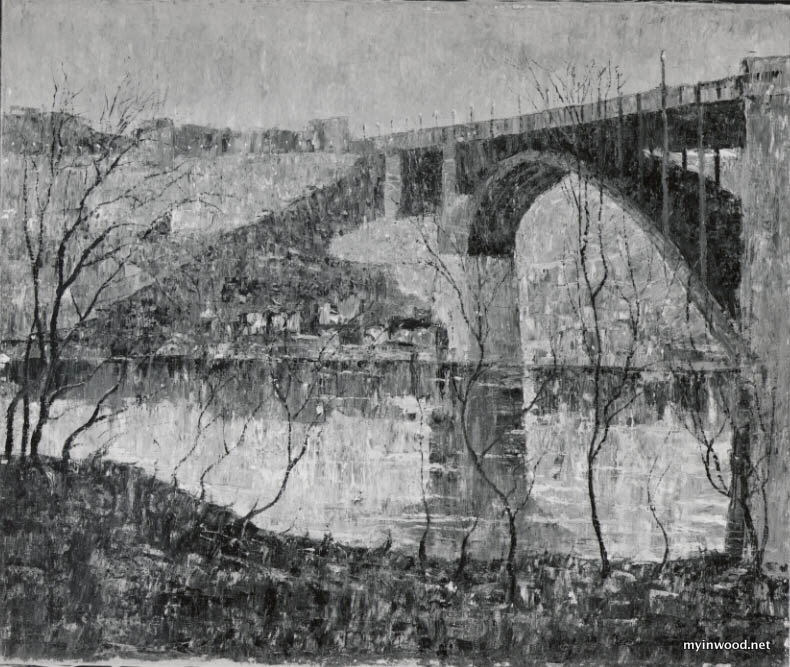
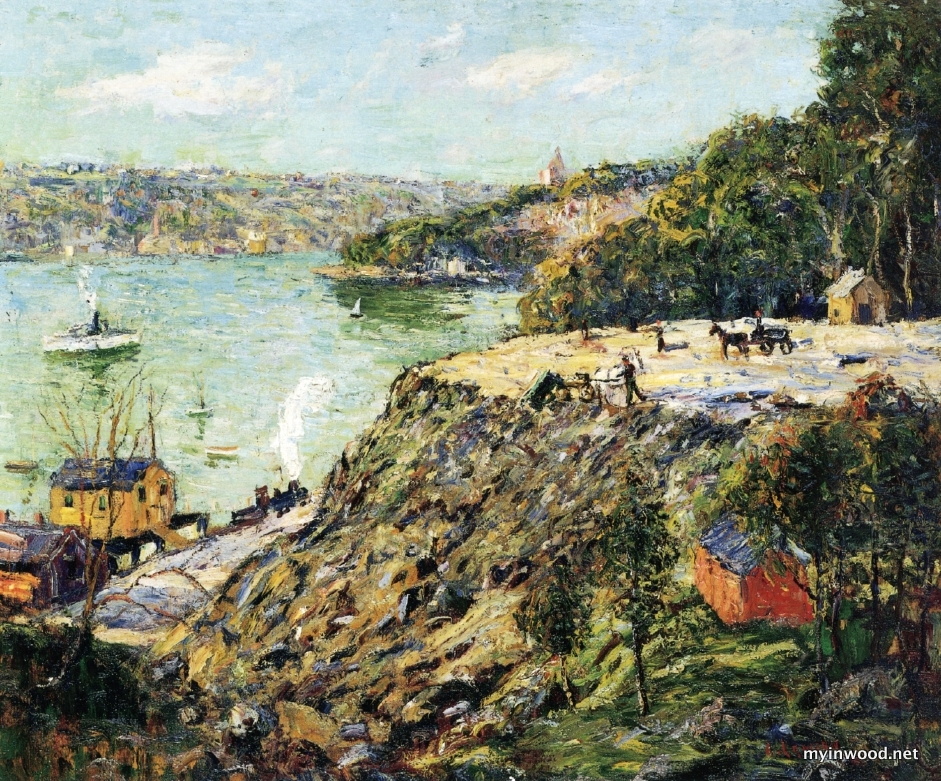
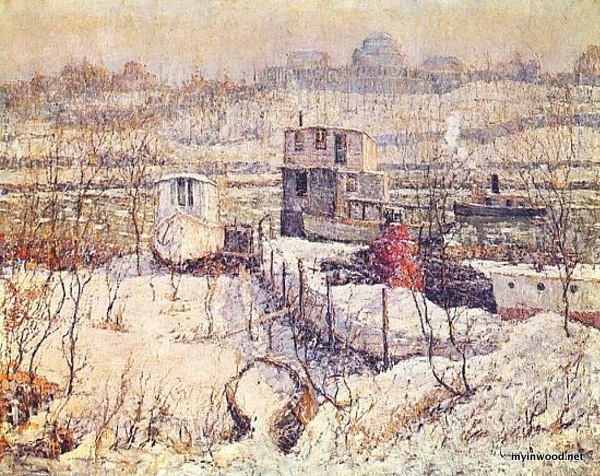
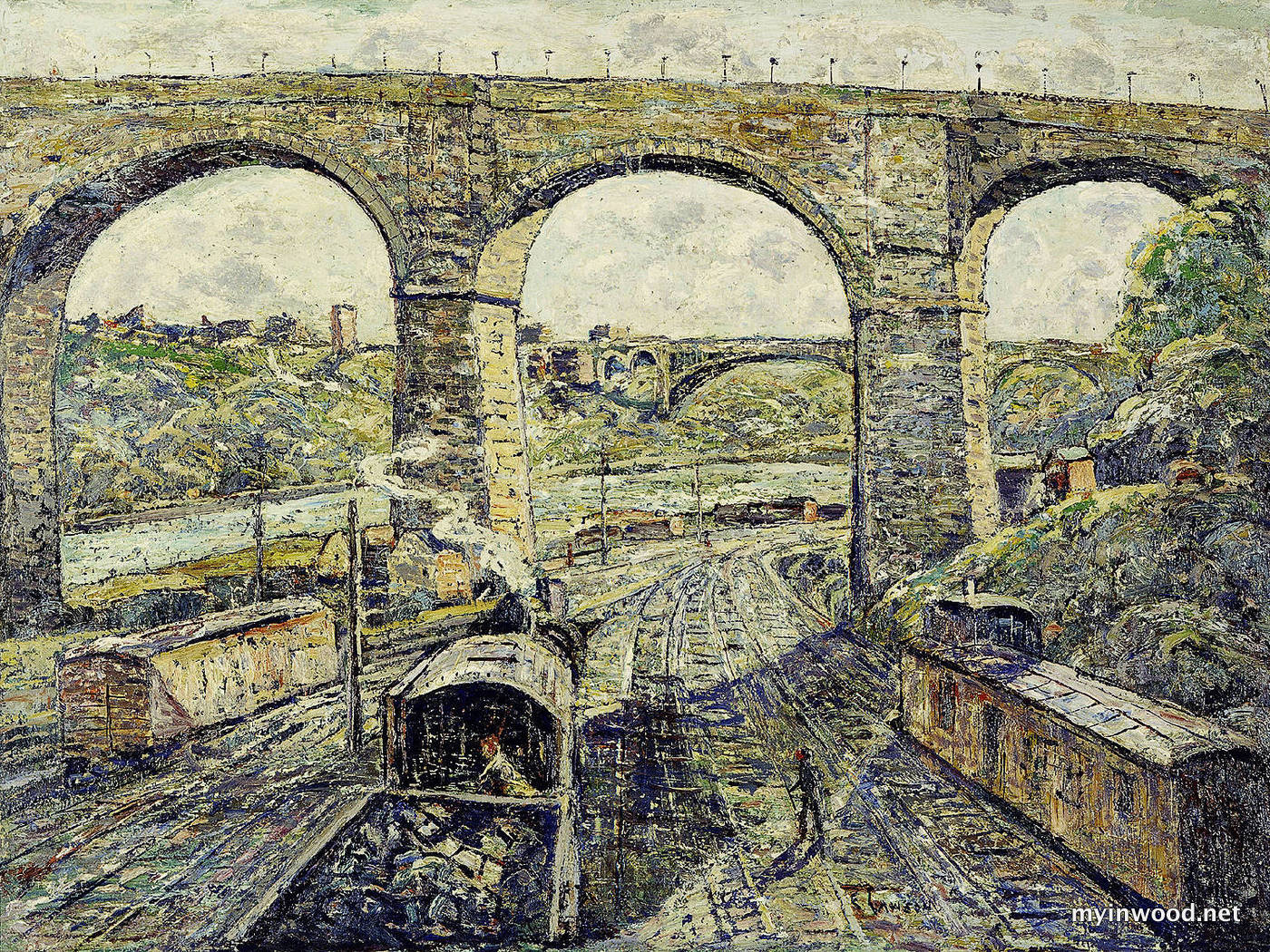

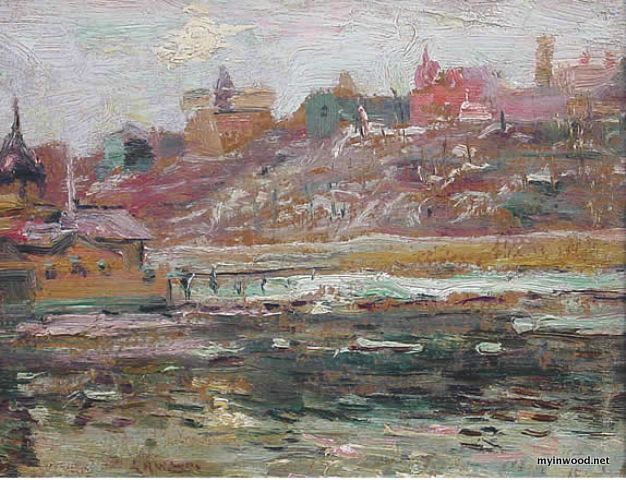
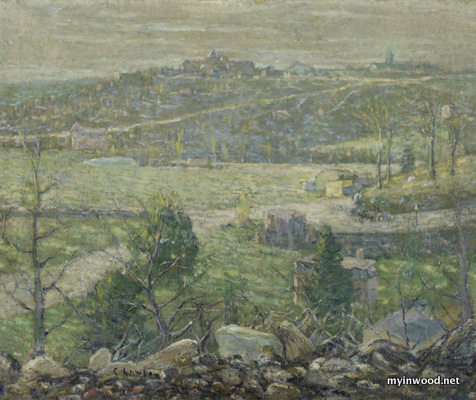

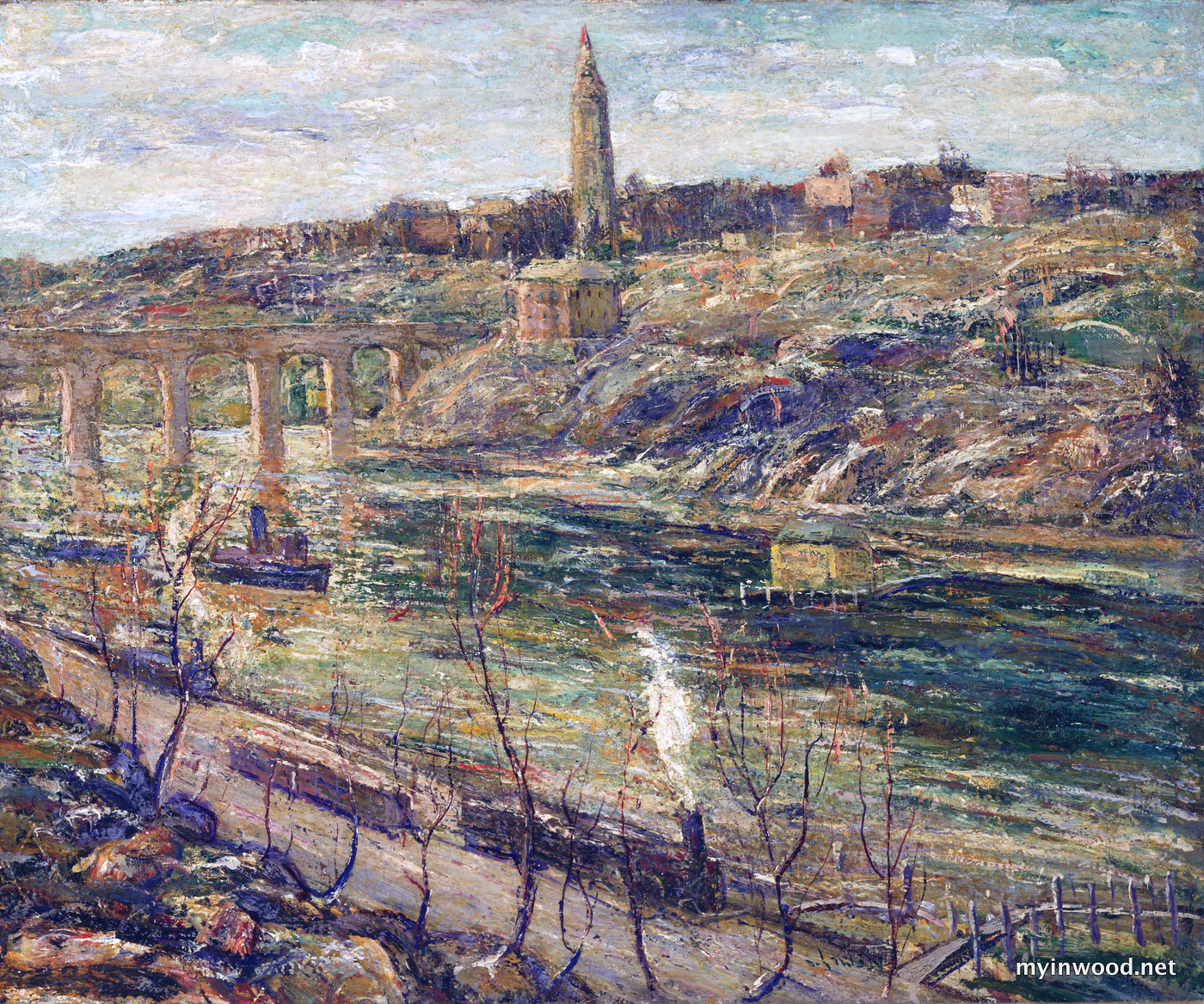
Over the course of Lawson’s colorful and prolific career he briefly shared an apartment with Somerset Maughan, summered in the South of France and, in his prime, saw his work displayed in the famous Group of Eight exhibition of 1908.
Following his paintbrush from Egypt to Kansas City Lawson often returned to his beloved Spuyten Duyvil and Inwood Valley.
In 1939 Lawson’s body was found on a Miami beach.







We have a portrait that Lawson did of my great uncle. We believe it is called Portrait of a Gentleman. Lawson painted himself into this portrait by showing himself through a reflection in a mirror as he is painting the portrait. We are thinking of loaning it to a museum. If anybody is interested or can send us more information please contact me.
Steve,
That sounds like a real treasure. I’ll post this and perhaps someone can steer you in the right direction. Cole
Hello, I found a hand painted limoge signed by E. Lawson. Actually its a teapot that I found in a thrift store. I have researched his work and found his paintings are worth much money but no information on signed pieces of pottery that he painted during his career.
Cole,
If you check the website of the Hunter Museum of American Art (located in Chattanooga, Tennessee), you’ll find that Lawson’s tulip tree painting no longer includes “Long Island” in the title. There’s a story behind this. On Feb. 28, 2001, the curator of the museum wrote to Tom Cahill and me that “The evidence that you have marshaled in favor of the location being Inwood, Manhattan rather than Long Island is very compelling.” The evidence in question included: (1) a copy Robert Bracklow’s photo of the tree, which I obtained from the NY Historical Society (the same photo that appears at of http://myinwood.wpengine.com/tulip-tree-of-old-inwood/) and (2) a painting Lawson did of the same locale, titled “Winter, Spuyten Duyvil,” which I photographed at the Wadsworth Atheneum, in Hartford, CT.
Tom Cahill deserves credit for immediately identifying the error in the title of the painting, which I posted, along with the two pictures mentioned above, at the Inwood@yahoodgroups site, administered by John McMullen. Cahill, McMullen and I all grew up in Inwood.
There is more information on this subject at http://www.columbia.edu/~nad7/neighborhood/200-220.html (scroll down to “Tulip Tree”).
While the museum in Tennessee (The Hunter Museum of American Art) has removed “Long Island” from the title of Lawson’s tulip tree painting, it still hasn’t been removed from the title at all.posters.com site, where you can purchase a nice copy of the painting.
[…] pottery and the surroundings that inspired not only the Voorhees, but also countless artists from Ernest Lawson to current Inwood artist Sky […]
[…] working in a variety of mediums, have long been attracted to Inwood. From impressionist Ernest Lawson painting his ever changing views of the Spuyten Duyvil to sculptor George Grey Barnard who found […]
I came across your site while reading the biography of John Quinn the famous collector and a painting of Lawson’s he acquired titled Morris Heights. I haven’t found it yet though I found a painting he did of the Morris Jumel Mansion, one of my favorite places. Anyway I love these paintings you posted — thanks!
I have an old family-owned painting of an “Icehouse” in a river signed by “Ernest Lawson” and the number “26” below signature, lower right-hand corner. I was told by an appraiser that it is not original because he signed most, if not all, works, “E Lawson”. Do you know any more on this topic? Thank you…